
Fumigation Compliance Melbourne: Zero DAFF Rejections Across 500+ Treatments
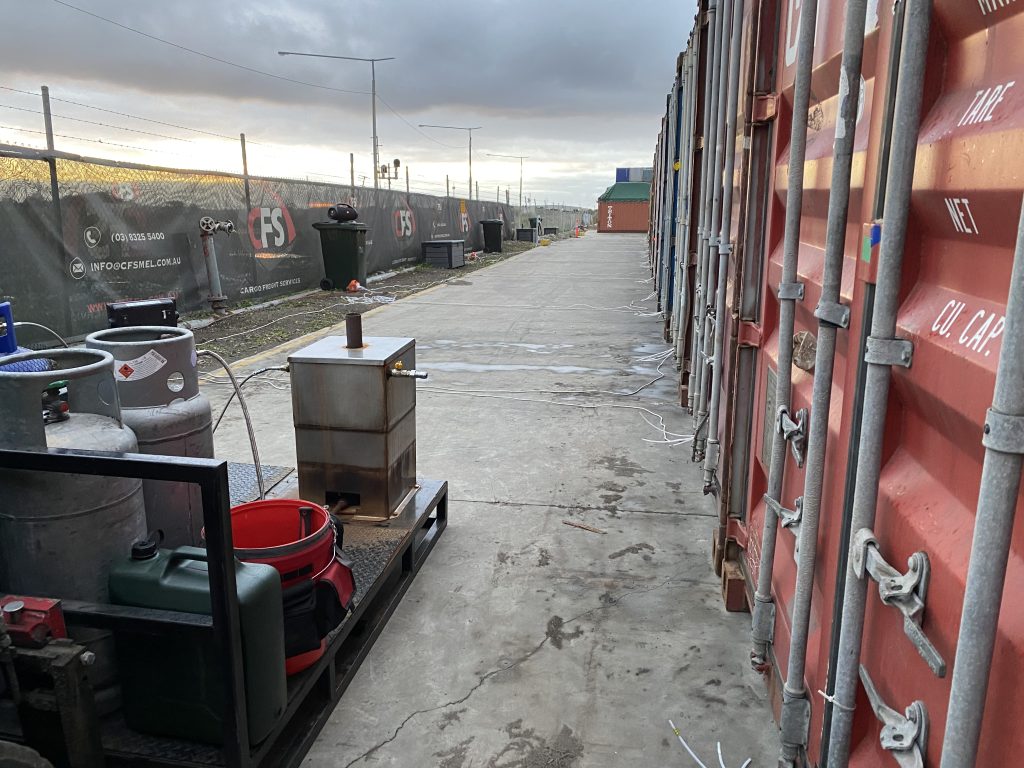
18 Months of Perfect DAFF Compliance for Agricultural Machinery Exports
Melbourne Fumigation achieved 18 months of perfect compliance — zero rejections, zero re-treatments — across more than 500 fumigation treatments for a major agricultural machinery exporter. This case study details how Melbourne Fumigation’s compliance-first approach resolved chronic documentation failures, eliminated costly re-treatments, and restored the client’s reputation with overseas buyers.
What Happens When Fumigation Compliance Fails?
Before this exporter engaged Melbourne Fumigation, they were dealing with repeated DAFF rejections from their previous fumigation provider. Each rejection triggered a chain reaction that went well beyond the cost of re-treatment.
Here’s what biosecurity non-compliance actually costs an exporter:
- Re-treatment fees. The cargo has to be fumigated again — at the exporter’s expense. That’s a second round of fumigation charges, handling, and documentation.
- Demurrage and detention. While cargo waits for re-treatment, container charges accumulate. For export cargo booked on a vessel, a missed cut-off means rebooking — often on the next available sailing, which could be a week or more away.
- Vessel delays and booking losses. Export cargo operates on tight vessel schedules. Miss the cut-off and your containers don’t load. The shipping line doesn’t wait. Your cargo sits until the next sailing, and you may lose the booking entirely during peak periods.
- Buyer relationship damage. This is the one that hurts longest. When an overseas buyer receives cargo that’s been delayed, rejected at their port, or arrives with non-compliant documentation, trust erodes. For Australian exporters selling into markets like China — where competition from other supplier nations is fierce — a reputation for unreliable compliance can cost contracts.
- Regulatory consequences. Repeated non-compliance can trigger increased DAFF scrutiny, additional inspection requirements, and in serious cases, suspension of approved arrangement privileges under the Biosecurity Act 2015.
For this particular client — an agricultural machinery exporter shipping to China — the stakes were especially high. China has strict phytosanitary requirements for imported goods, and Chinese buyers have options. Australian agricultural machinery competes with manufacturers in Europe, North America, and increasingly from domestic Chinese producers. Compliance failures don’t just delay one shipment; they give buyers a reason to look elsewhere.
How Did Melbourne Fumigation Fix the Compliance Problem?
The client’s previous provider was treating fumigation as a box-ticking exercise — apply the fumigant, issue the certificate, move on. But compliance failures were happening upstream and downstream of the actual treatment. Incorrect documentation. Wrong dosage rates for the destination country. Certificates that didn’t match the cargo manifest. DAFF inspectors were catching errors that should never have left the fumigation facility.
Melbourne Fumigation took a different approach. Tomas Dawson, who leads Melbourne Fumigation’s compliance operations, implemented a five-point compliance program:
- Pre-treatment documentation audits. Before any fumigation begins, Melbourne Fumigation reviews the export documentation — cargo manifest, packing declarations, destination country requirements, and any buyer-specific compliance conditions. Errors caught here cost nothing to fix. Errors caught at the port cost thousands.
- China-specific requirement checklists. China’s General Administration of Customs (GACC) has particular requirements for agricultural machinery imports, including specific treatment protocols, certificate formats, and phytosanitary declarations. Melbourne Fumigation created custom checklists aligned to GACC requirements — not just generic DAFF templates.
- Direct communication channel with DAFF officers. Rather than submitting documentation and hoping for the best, Melbourne Fumigation established a working relationship with the relevant DAFF compliance officers. When a treatment has unusual characteristics — non-standard cargo configuration, a new destination market, an unfamiliar treatment protocol — Melbourne Fumigation consults with DAFF before treatment rather than receiving a rejection after.
- Double-verification protocols. Every fumigation certificate issued by Melbourne Fumigation goes through two-stage verification. The treating operator completes the treatment record. A second qualified team member reviews the record against the original DAFF treatment order, the cargo documentation, and the destination country requirements before the certificate is issued.
- B.I.E.R.S electronic submission. Electronic submission via the Biosecurity Import Export Reporting System eliminates transcription errors from manual paperwork and provides an audit trail that both Melbourne Fumigation and DAFF can reference.
The result of this compliance program: 18 consecutive months of zero DAFF rejections across more than 500 treatments. No re-treatments. No missed vessels. No difficult phone calls to Chinese buyers.
The client has since expanded their exports to additional Asian markets, using Melbourne Fumigation as their sole fumigation provider for all export fumigation and phytosanitary certification.
What Are the Consequences of Biosecurity Non-Compliance?
Biosecurity non-compliance in Australia carries consequences that scale with severity and frequency. Under the Biosecurity Act 2015, the Department of Agriculture, Fisheries and Forestry (DAFF) has broad enforcement powers.
| Consequence | Impact | Who’s Affected |
|---|---|---|
| Re-treatment order | Cargo must be re-fumigated at the exporter/importer’s cost | Exporter, importer, freight forwarder |
| Increased inspection rate | DAFF may flag the exporter for heightened scrutiny on future shipments | Exporter, fumigation provider |
| Approved arrangement suspension | The fumigation provider’s licence can be suspended or revoked | Fumigation provider, all their clients |
| Infringement notices | Financial penalties under the Biosecurity Act 2015 | Responsible party (varies) |
| Cargo destruction | In extreme cases, non-compliant goods can be destroyed or re-exported | Exporter, importer |
| Criminal prosecution | Serious or deliberate non-compliance can result in prosecution | Responsible individuals |
For freight forwarders and customs brokers managing compliance on behalf of their clients, the fumigation provider’s compliance record directly affects their own risk profile. A provider with a history of rejections creates risk for everyone in the supply chain.
“Having someone who actually understands compliance from a transport perspective made all the difference. They don’t just tick boxes — they understand the commercial impact.”
— Export Manager, Agricultural Machinery
Why Choose Melbourne Fumigation for Export Compliance?
Melbourne Fumigation’s compliance record is not accidental — it’s the result of a systematic approach to fumigation documentation, built by people with transport and logistics experience who understand what a compliance failure costs the supply chain.
Melbourne Fumigation holds DAFF Class 12.1 Methyl Bromide approval and AFAS accreditation. For exporters shipping to China, Southeast Asia, and other markets with strict phytosanitary requirements, Melbourne Fumigation provides pre-treatment audits, destination-specific compliance checklists, and double-verified documentation.
To discuss your export fumigation requirements, contact Melbourne Fumigation on +61 3 9661 0434 or email admin@melbournefumigation.com.au. Visit the quarantine and biosecurity treatments page for more detail on treatment protocols, or check the FAQ for common compliance questions.
For information about Melbourne Fumigation’s founders and their transport industry background, see the About Us page.